
While Renault reported an over 12 per cent decline in sales and lost market share, Market leader Maruti Suzuki grew over 19 per cent.

New participants included Chinese players such as Great Wall Motors and Haima Automobile along with Olectra.

Tata Motors on Friday hinted that it may increase the prices of its cars due to continued pressure on margins because of increased input and freight costs.
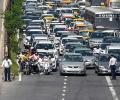
The lockdown in Maharashtra will have a catastrophic impact on April sales, as dealers will not be able to realise the potential of festivities like Ugadi, Gudi Padwa, Baisakhi and Poila Boishakh.
Automobile sales in India started on a high note this fiscal with cars and bikes witnessing an over 16 per cent surge in demand in April even as commercial vehicles saw numbers gain to the maximum, rising by a whopping 68.5 per cent.
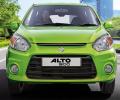
Maruti Suzuki, Tata Motors and Hyundai stand to gain the maximum, given their large portfolio of products in the sub-4 meter segment.

Passenger vehicle wholesales in India rose by 14.16 per cent in August to 2,15,916 units, driven by pent-up demand, industry body SIAM said on Friday. According to the latest data by the Society of Indian Automobile Manufacturers, passenger vehicle wholesales stood at 1,89,129 units in the same month last year.

Cumulative sale at India's top six passenger vehicle (PV) makers dropped 0.7 per cent to 267,000 units, from 269,000 a year before.

Tech Mahindra was the top loser in the Sensex pack, crashing over 9 per cent, followed by Kotak Bank, Axis Bank, TCS, Infosys and HUL. On the other hand, Hero MotoCorp, Bajaj Auto, Bajaj Finance and Titan were the gainers.
India's second-biggest carmaker Hyundai Motor India on Monday said it plans to increase prices by the next month.

Global NCAP strongly believes that no manufacturer anywhere in the world should be developing new models that are so clearly sub-standard.

Car makers are trying hard to boost sales in India.

Today, automatic cars are reliable, fuel-efficient and easy to maintain

The Baleno excels in most departments, leaving little scope for improvement in some.
Accelerated by top three automakers -- Maruti, Hyundai and Tata Motors -- the car sales posted a phenomenal 73.1 per cent rise in February, promising an impressive performance during 2003-04.
Indian passenger car sales jumped by 10.15 per cent in January to 54,825 units from 49,769 units in the same month last year.

There was no sale of premium sedan Kizashi during the month.
Domestic car sales went up by 15.89 per cent during December 2002 as auto-makers like Maruti, Hyundai, Tata Engineering and Honda witnessed increased demand during the month.
Car sales likely to touch record 3-mn mark by the end of March.
Driven by Maruti, Hyundai and Tata Motors, car sales soared 24.1 per cent in September 2004 for the sixth consecutive month, raising hopes of good second quarter profit for automakers.
Car sales went up by an 18 per cent in July 2004 for the fourth consecutive month this fiscal buoyed by Maruti, Hyundai and Tata Motors.
Driven by the top three carmakers -- Maruti, Hyundai and Tata Motors -- the car sales surged by 25 per cent in June 2004 over the same month last year.

Apart from a pavilion of vintage cars, there will be a Bollywood corner

Owing to the poor market conditions and tepid sentiments, the size of the show has shrunk compared to the last edition, which took place in 2018. A majority of the two-wheeler makers, and several car and commercial vehicle makers, have opted out of this year's show, which opens for the media on Wednesday.

India has a history of jugaad, and retrofitting vehicles is one such manifestation of the legendary Indian skill. Not so long ago autorickshaws and small Marutis used to strap on subsidised LPG cylinders and power themselves to a cheap ride. There were the odd explosions, lives were lost, but the jugaad continued. Then compressed natural gas (CNG) was introduced in Delhi following a court order. Initially, customised CNG kits were fitted to conventional (internal combustion engine or ICE) autos cheaply, enabling commuting at less than half of what you would cough up for diesel. The industry is better organised now with Suzuki and Hyundai designing CNG-fired vehicles, and Mahindra and TVS manufacturing liquefied petroleum gas (LPG)-powered three wheelers.
Propelled by the top three automakers -- Maruti, Hyundai and Tata Motors -- domestic car sales surged by a robust 31.1 per cent in January.\n\n\n\n

December is a month of high retail sales for cars, as companies and dealers push stocks to clear inventories
Cheered by Maruti, Hyundai and Tata Motors, car sales surged by a robust 24 per cent in October 2003 as customers got attracted to low interest finance and a spate of car roll-outs.
Propelled by Maruti, Hyundai and Tata Motors, car sales surged by 12.8 per cent in September 2003 as customers reaped benefits of low interest loans and budgetary cut in excise.
The domestic car sales rose by a modest 6.7 per cent in August 2003 as market leader Maruti, Fiat and Hindustan Motors suffered a decline even as Hyundai and Tata Motors improved their performance.
Under pressure after the instant success of Maruti's 'Swift', Hyundai Motors on Wednesday launched an offensive by reducing prices of its Santro Xing by over Rs 19,000.

Chevrolet loses India on the map Why did GM's iconic all American brand mess up its chances in one of the fastest growing automobile markets?

The price differential between diesel and petrol has narrowed. But there are still enough reasons to opt for the diesel variant.
Car sales in the country surged by 41 per cent in May 2003 as all major companies like Maruti, Hyundai and Tata Engineering recorded strong growth following an eight per cent excise duty cut in this year's Budget.
 © 2026 Rediff.com - Advertise with us - Disclaimer - Privacy Policy - Sitemap - Feedback - About us - Terms of use - Grievances